Frequently Asked Pediatric Questions
Quick, evidence-based answers to the most common questions parents and caregivers ask about childhood ear, nose, and throat issues, medication safety, and pediatric emergencies. Each topic below is reviewed for alignment with current American Academy of Pediatrics (AAP) and American Academy of Otolaryngology guidance.
How do I stop my child's nosebleed?
Most pediatric nosebleeds (epistaxis) come from small blood vessels on the front part of the nasal septum and stop within 5–10 minutes of steady pressure. Dry indoor air, vigorous nose-blowing, allergies, and nose-picking are the most common triggers in children.
Step-by-step:
- Have the child sit up straight and lean slightly forward — this prevents swallowed blood from causing nausea.
- Pinch the soft part of the nose (just below the bony bridge) firmly between thumb and index finger.
- Hold continuous pressure for a full 5–10 minutes without releasing to check.
- Apply a cool compress to the bridge of the nose to encourage vasoconstriction.
- Once bleeding stops, avoid nose-blowing, hot drinks, and strenuous activity for several hours.
Seek medical attention if: bleeding continues after 20 minutes of steady pressure, the child has frequent recurrent nosebleeds (more than once a week), bleeding follows a head injury, or the child is taking blood thinners or has a known bleeding disorder.
Prevention: A cool-mist humidifier in the bedroom, saline nasal spray, and a thin layer of petroleum jelly inside each nostril at bedtime substantially reduce recurrence in dry months.
Pediatric sleep apnea — how do I know if my child has it?
Obstructive sleep apnea (OSA) affects an estimated 1–5% of children and is most often caused by enlarged tonsils and adenoids. Untreated OSA can affect growth, behavior, attention, and school performance, so it's worth recognizing early.
Symptoms during sleep:
- Loud, regular snoring (more than 3 nights per week)
- Witnessed pauses in breathing followed by gasping or snorting
- Restless sleep, frequent position changes, or sleeping with the neck extended
- Mouth breathing
- Bedwetting that returns after a child has been dry
Symptoms during the day:
- Hyperactivity or inattention (often misattributed to ADHD)
- Morning headaches
- Difficulty concentrating in school
- Excessive sleepiness in older children
Diagnosis usually requires a sleep study (polysomnography). The first-line treatment in otherwise healthy children is adenotonsillectomy, which resolves symptoms in roughly 80% of cases. Other options include nasal steroids, weight management, or CPAP for older children.
Which over-the-counter medications can I safely combine?
The most common — and most often misunderstood — questions in pediatric pharmacy involve combining medications. The two biggest risks are doubling up an active ingredient (because combination cold products often contain acetaminophen or an antihistamine you didn't notice) and giving adult formulations to children.
Generally safe combinations (with weight-appropriate dosing):
- Acetaminophen + ibuprofen for fever or pain — these work by different mechanisms and can be alternated every 3 hours.
- Antihistamine + saline rinse for allergic rhinitis.
- Inhaled albuterol + oral corticosteroid when prescribed for asthma exacerbations.
Avoid these combinations:
- Two products with the same active ingredient (e.g., Tylenol + a multi-symptom cold formula that also contains acetaminophen).
- Multi-symptom cough/cold products in children under 4 — the FDA recommends against them due to limited efficacy and potential serious side effects.
- Adult-strength medications scaled down by guesswork. Always use pediatric formulations and weight-based dosing.
- Aspirin in children or teens with a viral illness — risk of Reye's syndrome.
When in doubt, read the active ingredients on every label, write down what was given and when, and call your pharmacist or pediatrician. The Poison Control hotline (1-800-222-1222) is free and available 24/7.
How can I relieve my child's nasal congestion?
Most pediatric congestion is caused by viral upper respiratory infections (the common cold) and resolves on its own in 7–10 days. The goal of treatment is comfort and easier breathing — medications won't shorten the illness.
Non-medication approaches (work for any age):
- Saline nasal drops or spray — safe at any age, including newborns. Apply 2–3 drops per nostril, then suction with a bulb syringe in infants.
- Cool-mist humidifier in the bedroom (clean weekly to prevent mold).
- Elevate the head of the bed slightly — never use pillows in cribs for infants under 12 months.
- Steamy bathroom — sit with the child in a warm, steamy bathroom for 10–15 minutes.
- Hydration — extra fluids thin nasal secretions and help drainage.
What about decongestants and antihistamines?
- The FDA recommends against over-the-counter cough and cold medicines for children under 4.
- Second-generation antihistamines (cetirizine, loratadine, fexofenadine) help only when congestion is allergy-driven, not viral.
- Pseudoephedrine and phenylephrine are not recommended in young children.
See a doctor if:
- Symptoms last more than 10 days without improvement
- Fever above 102°F (38.9°C) lasting more than 3 days
- Thick green or yellow nasal discharge with facial pain (possible sinusitis)
- Difficulty breathing, fast breathing, or visible chest retractions
- Symptoms worsen after initial improvement (suggests bacterial superinfection)
Why do my child's ears stick out?
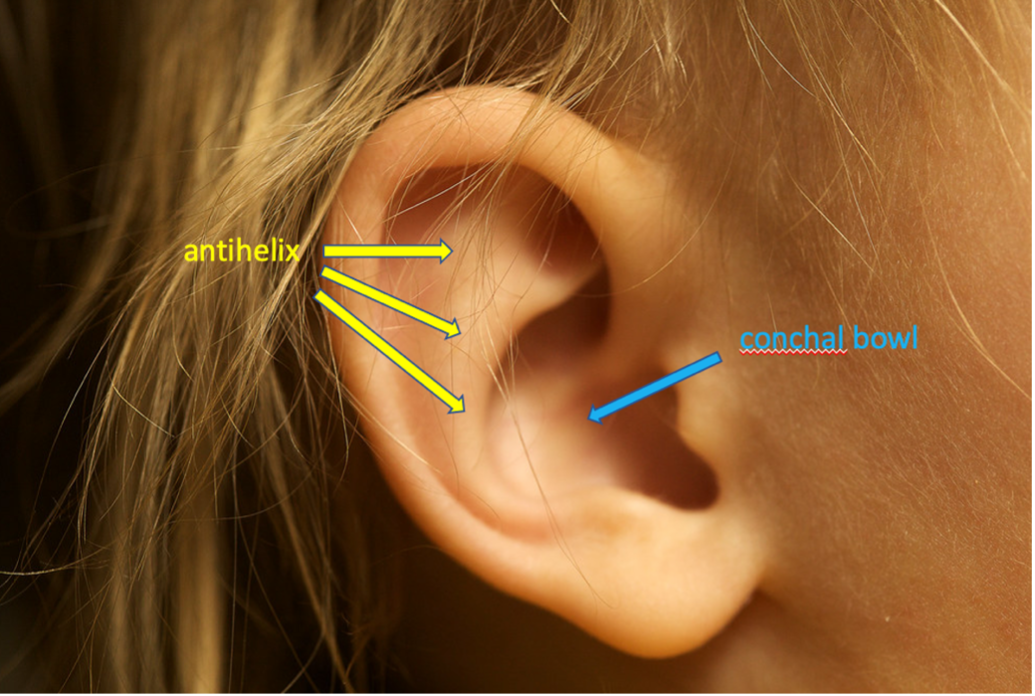
Prominent or "protruding" ears affect roughly 5% of children and are usually caused by underdeveloped folds in the cartilage of the outer ear (the antihelical fold) or by an unusually deep concha (the bowl-shaped part of the ear). This is a developmental variation, not a medical problem — there's no effect on hearing or function.
About the condition:
- Often present at birth, but can become more noticeable during the first year as the cartilage hardens.
- Frequently runs in families.
- Does not affect hearing.
- Can cause self-consciousness, teasing, or social anxiety once children reach school age.
Treatment options:
- Ear molding (non-surgical) — soft splints worn for 4–6 weeks. Most effective when started in the first 2–3 weeks of life and only useful in the first 6–8 weeks while the cartilage is still pliable.
- Otoplasty (surgical correction) — typically performed after age 5 when the ear has reached ~85% of adult size. Day-surgery procedure done under general anesthesia in younger children, sometimes local anesthesia in older children and adults.
- Supportive counseling if the child is showing signs of self-consciousness — many children adapt well without surgery.
If you've noticed prominent ears in a newborn, see a pediatric otolaryngologist within the first month — early non-surgical molding has a high success rate and avoids surgery entirely.
Sources & references
- AAP HealthyChildren.org
- American Academy of Otolaryngology–Head and Neck Surgery (ENThealth.org)
- Centers for Disease Control and Prevention (CDC)
These references informed the guidance on this page. They are provided for transparency and further reading; they are not endorsements, and this page is not a substitute for the advice of your child's own clinician.